
Drones in Film Production: A Promotional Film for reconcept
Drones—or, more accurately, multicopters—have become a must-have for every film production company. Whereas a helicopter was once needed for aerial photography, a drone is now typically used.
In June 2016, we were commissioned by the Hamburg-based investment firm reconcept to produce a film to promote an investment fund that invests in river hydroelectric power plants in Canada. You can watch the promotional video for this novel, highly innovative approach here…
You are currently viewing a placeholder content from YouTube. To access the actual content, click the button below. Please note that doing so will share data with third-party providers.
More InformationThe DJI Phantom 4 in Action
Around that time, the new DJI Phantom 4 drone was just hitting the market. Even today, the Phantom 4 is a fantastic drone. Thanks to its numerous assistance systems, it’s a joy to fly and also captures breathtaking video footage.
Shortly before our trip to Canada began, we decided on the spur of the moment to buy the drone—an investment that definitely paid off. It allowed us to shoot aerial footage in Canada that, before that, would have been possible only with a helicopter, if at all.
Up until that point, we had been happy to book a helicopter—complete with a camera system and operator—for this type of filming. However, even though they were aware of the significantly more affordable option of filming with a multicopter, our clients were understandably no longer willing in every case to charter a helicopter for several thousand euros just to get a few seconds of impressive footage.
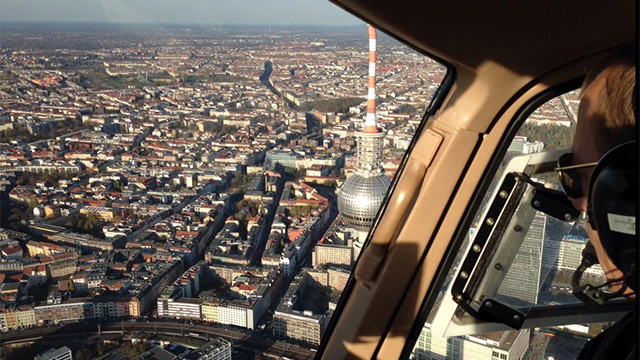
In previous years, before drones existed, we were able to take impressive aerial footage with helicopters time and time again.
Film Production for Shipping Companies: Spotlight on JPO LEO
For example, for shipping companies that needed footage of their container ships. Even today, this isn’t always possible using drones.
For example, we shot this film for HCI Capital in 2011. At the time, HCI Capital (now Ernst Russ AG) had launched a single-vessel fund featuring a used container ship, which was operated by the Oltmann shipping company from Stade and managed by Peter Döhle from Hamburg.
The aerial footage was shot off the northeast coast of New Zealand, near the Bay of Islands. Organizing this shoot was a complex undertaking.
We had originally planned to film the JPO LEO—that’s the ship’s name—shortly after it set sail from Tauranga, located about 150 km southeast of Auckland.
Unfortunately, unforeseen delays at the port threw a wrench in our plans. Instead of leaving during the day, the JPO LEO set sail in the evening.
For us, that meant we would have to follow the ship further north, setting out from Auckland after daybreak. And so we took off as early as 5:30 a.m.
Working closely with the ship’s captain, we tracked its route. Around 7:30 a.m.—after we had refueled once—we finally came across the ship about 220 km northeast of Auckland, off the Bay of Islands.
In about 45 minutes, despite less-than-ideal lighting conditions, we took some very beautiful aerial shots and captured the ship from every angle and in various positions.
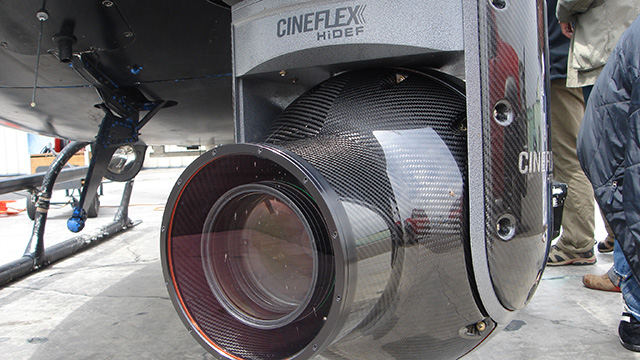
At the time, we worked with https://www.tonymonkfilms.com, a family-owned business just like PanFilm. Tony Monk is the company’s world-renowned chief pilot, and his son Blair operated the camera systems—whether Shotover, Cineflex, or similar.
In our case, we shot with a Cineflex in uncompressed 4:4:4 resolution. In the end, our client, HCI Capital, the Oltmann shipping company from Stade, and our distribution partners were extremely satisfied with the film.
You are currently viewing a placeholder content from YouTube. To access the actual content, click the button below. Please note that doing so will share data with third-party providers.
More InformationHelicopters vs. Drones: Differences and Applications
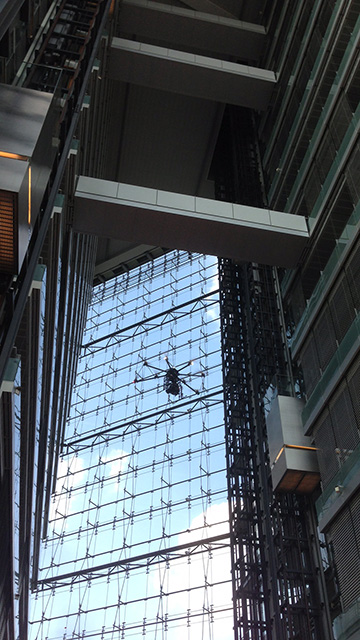
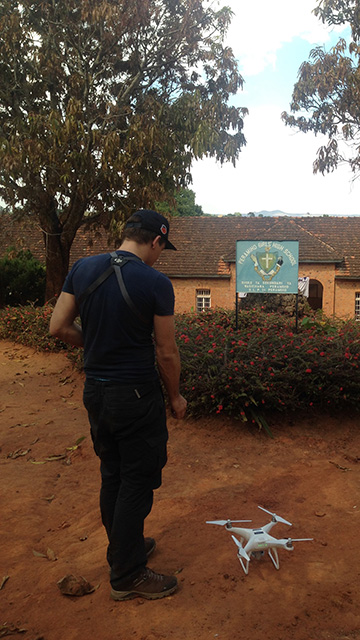
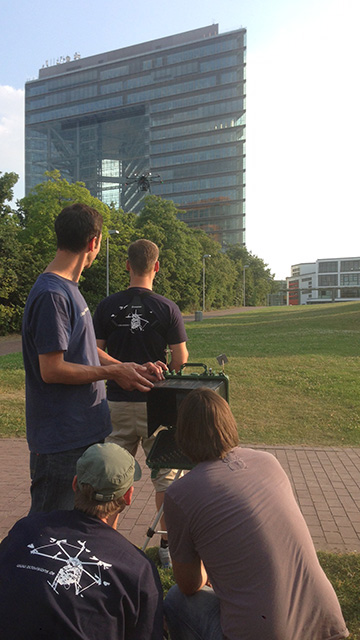
Helicopters and drones have different advantages and, as a result, different areas of application. Due to their design, drones are significantly smaller and allow the pilot to fly in tighter spaces—places where a helicopter could never fly. For example, in urban areas in compliance with the EU Drone Regulation.
We are experts in real estate videos
PanFilm specializes in real estate videos. For many of our clients, we’ve been able to capture fantastic aerial footage of their properties using drones. One example is our long-standing client KGAL, an independent German investment and asset manager based in Grünwald that operates in the renewable energy, aviation, and real estate sectors. In 2019, we were commissioned to produce a promotional video for their real estate division. For the video, we captured architectural highlights from the air and on the ground in London, Prague, and Leipzig.
You are currently viewing a placeholder content from YouTube. To access the actual content, click the button below. Please note that doing so will share data with third-party providers.
More InformationDrones and Helicopters: A Comparison of Pros and Cons
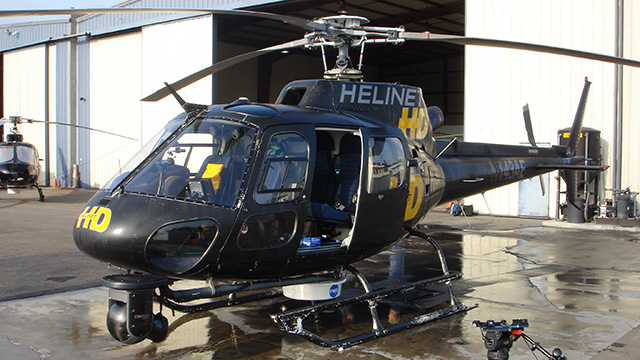
Drones are significantly quieter, more environmentally friendly (thanks to electric motors), and pose less of a risk to people, since they no longer require a pilot on board. In contrast, helicopters have a much greater range, reach significantly higher top speeds (between 200 and 300 km/h), have a larger payload capacity (meaning they can carry larger camera systems), and are far less susceptible to bad weather. This means they can fly in rain, high winds, and sub-zero temperatures—conditions in which a drone would have long since been unable to fly.
And yet we have to admit that ever since we bought our first drone, there hasn’t been a single reason to use a helicopter for aerial shots. By now, it’s unimaginable for us to do without this wonderful tool. Since 2016, we’ve been flying our drones on numerous productions around the world, creating fantastic aerial footage for our clients.
Inhaltsverzeichnis